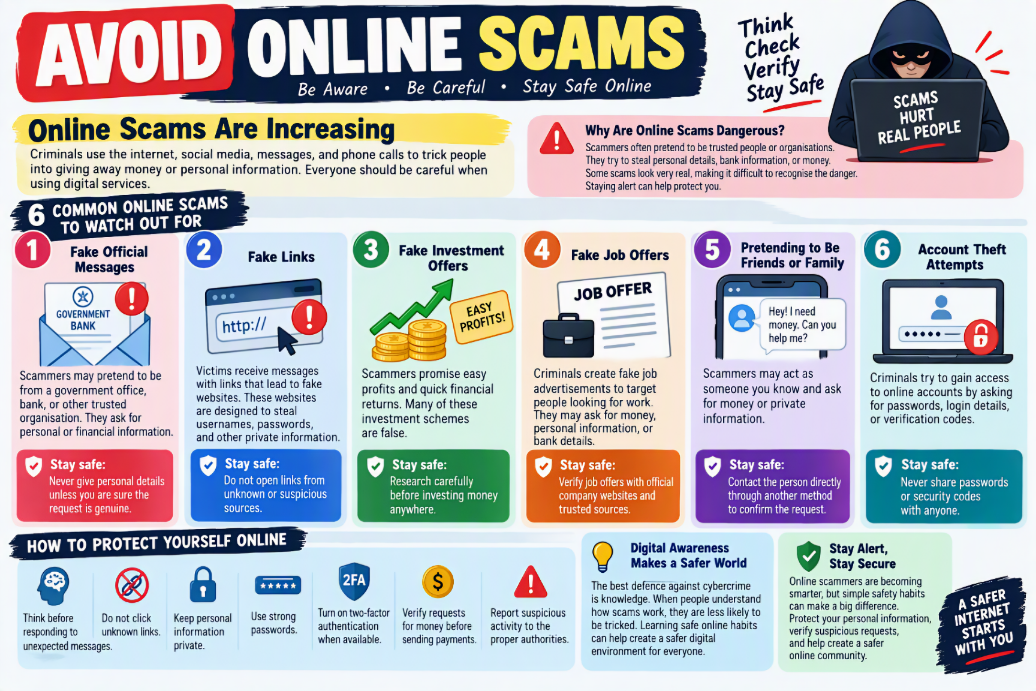


# Online Scams Are Increasing: 6 Common Tricks to Watch Out ForOnline scams are becoming more common. Criminals use the internet, social media, messages, and phone calls to trick people into giving away money or personal information. Everyone should be careful when using digital services.Experts say that people should never share passwords or verification codes with anyone. They should also avoid clicking on suspicious links and always check who is asking for money before making any payment.## Why Are Online Scams Dangerous?Scammers often pretend to be trusted people or organisations. They try to steal personal details, bank information, or money. Some scams look very real, making it difficult for people to recognise the danger.Staying alert and learning about common scam methods can help protect individuals from becoming victims.## Six Common Online Scams### 1. Fake Official MessagesScammers may pretend to be from a government office, bank, or other trusted organisation. They ask for personal or financial information.**Stay safe:** Never give personal details unless you are sure the request is genuine.### 2. Fake LinksVictims receive messages with links that lead to fake websites. These websites are designed to steal usernames, passwords, and other private information.**Stay safe:** Do not open links from unknown or suspicious sources.### 3. Fake Investment OffersScammers promise easy profits and quick financial returns. Many of these investment schemes are false.**Stay safe:** Research carefully before investing money anywhere.### 4. Fake Job OffersCriminals create fake job advertisements to target people looking for work. They may ask for money, personal information, or bank details.**Stay safe:** Verify job offers with official company websites and trusted sources.### 5. Pretending to Be Friends or FamilyScammers may act as someone you know and ask for money or private information.**Stay safe:** Contact the person directly through another method to confirm the request.### 6. Account Theft AttemptsCriminals try to gain access to online accounts by asking for passwords, login details, or verification codes.**Stay safe:** Never share passwords or security codes with anyone.## How to Protect Yourself OnlineFollow these simple rules:- Think before responding to unexpected messages.- Do not click unknown links.- Keep personal information private.- Use strong passwords.- Turn on two-factor authentication when available.- Verify requests for money before sending payments.- Report suspicious activity to the proper authorities.## The Importance of Digital AwarenessThe best defence against cybercrime is knowledge. When people understand how scams work, they are less likely to be tricked. Learning safe online habits can help create a safer digital environment for everyone.## ConclusionOnline scammers are becoming smarter and using new methods to target victims. By staying alert, protecting personal information, and verifying suspicious requests, people can reduce the risk of being scammed. Simple safety habits can make a big difference in staying secure online.